
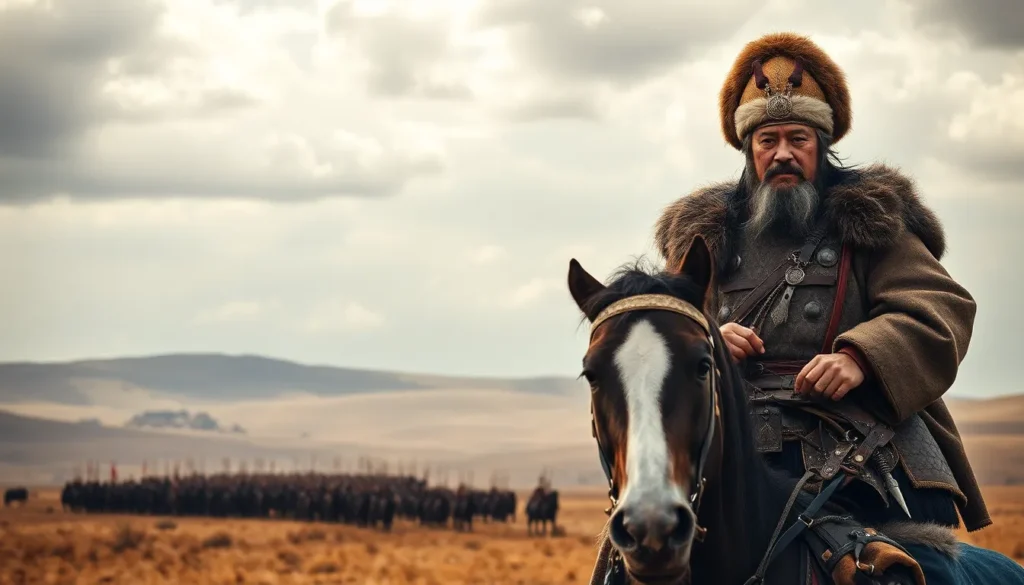
When it comes to Genghis Khan, most people think of his legendary conquests and the vast empire he built. But did you know he might also hold the title for the most prolific father in history? That’s right! This 13th-century warrior not only changed the course of history but also left a very personal legacy that’s still felt today.
Genghis Khan’s Legacy
Genghis Khan’s legacy extends far beyond his military achievements and territorial conquests. Many historical records suggest he fathered hundreds, if not thousands, of descendants. His offspring significantly impacted the genetic makeup of populations across Eurasia.
Research indicates that a substantial number of men today may share genetic markers tracing back to him. Genetic studies show that almost 16 million men across a vast region, from Mongolia to Western Europe, possess a nearly identical Y-chromosome, suggesting descent from a common ancestor.
Cultural influences stem from Genghis Khan’s reign, shaping societies, governance, and trade routes that form the backbone of modern civilizations. The Mongol Empire facilitated global communication and commerce, setting the stage for future international relations.
Various dynasties and political structures emerged from his lineage, demonstrating the enduring impact of Genghis Khan’s bloodline. His descendants ruled prominent areas, including the Yuan Dynasty in China and the Golden Horde in Russia.
Influence also permeates contemporary culture through literature, film, and art that depict Genghis Khan’s storied life. The fascination with his legacy fosters continuous exploration of his contributions and controversial reign.
Thus, Genghis Khan’s legacy is a multifaceted tapestry, woven from threads of lineage, cultural exchange, and historical significance, which continues to intrigue and inspire. This enduring legacy reinforces the significance of understanding the impact of one man’s lineage on the course of history.
The Historical Context

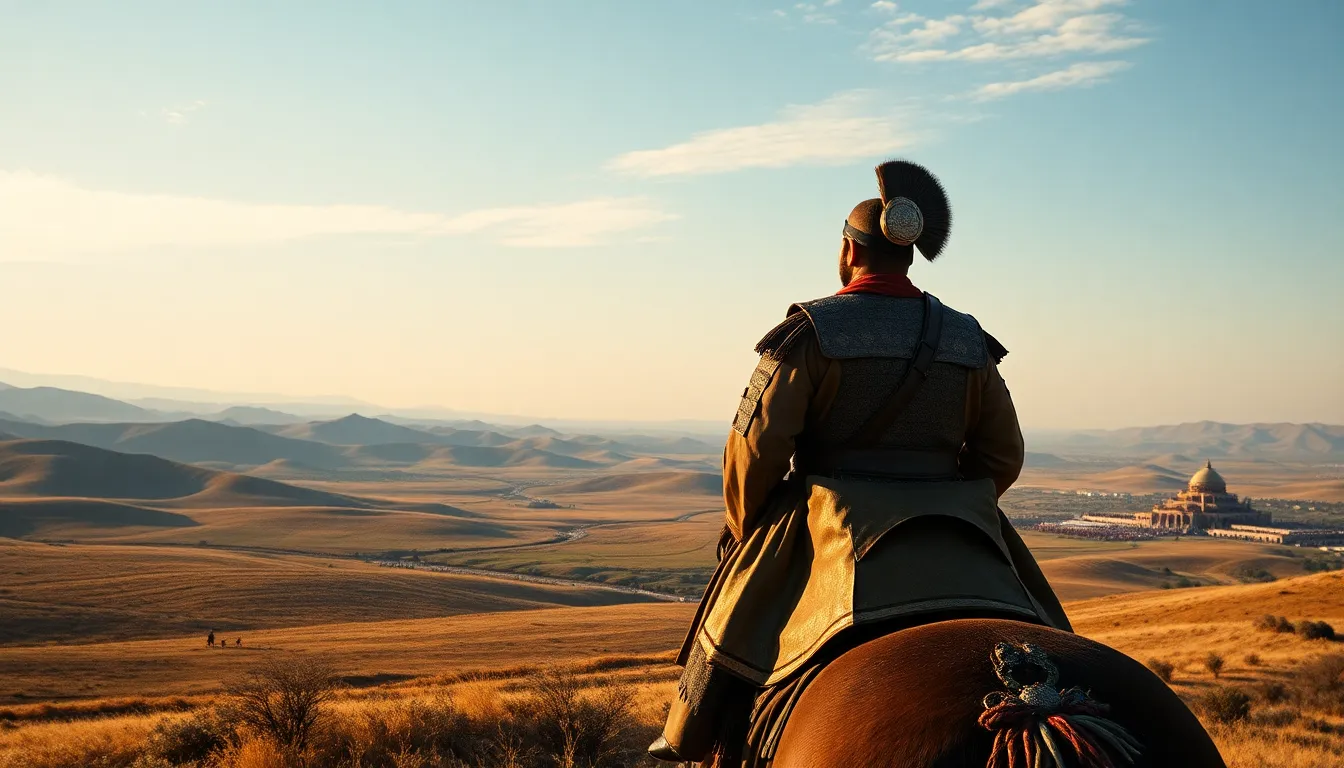
Genghis Khan’s legacy reflects a significant historical backdrop that shaped numerous societies. His reign as the leader of the Mongol Empire transformed vast territories and cultures across Eurasia.
The Mongol Empire
The Mongol Empire emerged in the early 13th century under Genghis Khan’s leadership. It became the largest contiguous empire in history, spanning from Eastern Europe to East Asia. Conquests included regions like China, Persia, and parts of Russia. Genghis Khan’s military strategies revolutionized warfare. He utilized mobility and psychological tactics to outmaneuver larger armies. His empire also facilitated trade along the Silk Road, enhancing cultural exchanges. Trade relations opened new economic channels, allowing goods, ideas, and technologies to circulate widely.
The Social Structure
Mongol society featured a unique social hierarchy. The clan system played a central role, with each clan operating as an autonomous unit. Loyalty to one’s clan dictated personal and political alliances. Nobles often held positions of power, influencing governance and military decisions. The role of women was distinct; they participated actively in economic activities and held significant responsibilities. Genghis Khan promoted meritocracy, rewarding skill and loyalty rather than aristocratic birth. This approach unified diverse tribes, fostering a sense of belonging across the empire.
Offspring of Genghis Khan
Genghis Khan’s lineage includes numerous offspring, contributing to his status as one of history’s most prolific fathers. His genetic legacy persists in millions across Eurasia today.
Acknowledged Sons
Among his acknowledged sons, four stand out: Jebe, Chagatai, Ogedei, and Tolui. Jebe gained recognition for his military prowess, showcasing leadership during key battles. Chagatai led the Chagatai Khanate, influencing Central Asian politics. Ogedei, designated as his successor, expanded the empire further and focused on consolidating power. Tolui played a crucial role in military campaigns, serving as an essential general during Genghis Khan’s reign. Their contributions shaped the Mongol Empire’s development and expansion.
Daughters and Their Roles
Genghis Khan’s daughters held significant positions, shaping political alliances through marriage. Kherlen married into the Merkit tribe to strengthen ties, while Oghul Qaimish secured relationships with influential clans. These daughters often wielded influence in their respective regions, acting as key figures in diplomacy and governance. They played an instrumental role in ensuring the stability and continuity of their father’s empire. Through their marriages and connections, they expanded the reach of Mongol influence across various territories.
Estimating the Number of Offspring
Genghis Khan’s lineage presents a fascinating perspective on his vast progeny. Research and historical accounts indicate substantial numbers of descendants.
Genetic Studies
Genetic studies reveal that nearly 16 million men in Eurasia carry Y-chromosome markers linked to Genghis Khan. This figure points to an extraordinary reproductive legacy. The genetic impact stems from his marriages and the practice of taking multiple wives, common among Mongol leaders. Findings suggest that one in 200 men alive today may trace their ancestry to him, highlighting his profound influence across generations. Understanding the genetic dispersal helps quantify his offspring’s reach, illustrating an enduring connection to his legacy.
Historical Accounts
Historical accounts further illustrate Genghis Khan’s prolific nature. Chroniclers from the 13th century documented his marriages and numerous children. Besides his acknowledged sons, he fathered many daughters, often marrying them off to forge alliances. These strategic moves expanded Mongol influence, ensuring political stability and social ties across regions. The blending of families through marriage facilitated powerful connections, enhancing his empire. Documented lineage and alliances provide context for understanding his expansive descendant network, underscoring the strategic dimension of his fatherhood.
Genghis Khan’s legacy as a father extends far beyond mere numbers. His remarkable influence is evident in the millions who trace their ancestry back to him. This vast lineage not only reflects his personal life but also highlights the profound impact he had on shaping the political and social landscapes across Eurasia.
The strategic marriages and alliances formed through his daughters further cemented his role in history. Genghis Khan’s ability to create a lasting dynasty illustrates the intricate connections between family, power, and legacy. His story continues to inspire and intrigue, reminding us of the enduring effects of his reign on modern society.


