In a world where getting lost is a thing of the past (thanks to smartphones), iPhone users often wonder just how accurate location sharing really is. Picture this: you’re trying to meet a friend for coffee, but your phone insists they’re still in the middle of a lake. Yikes! With all the tech wizardry packed into these devices, it’s crucial to understand how location services work and what factors can throw them off track.
From GPS satellites to Wi-Fi signals, iPhones use a cocktail of technologies to pinpoint your whereabouts. But is that little blue dot on the map as reliable as your best friend’s sense of direction—or more like that one friend who always shows up late? Dive in as we unravel the mysteries of location sharing on iPhones and discover just how accurate that location really is.
Overview Of Location Sharing On iPhone
Location sharing on iPhone utilizes multiple technologies for accurate positioning. GPS satellites provide primary coordinates, while Wi-Fi signals and cellular networks enhance precision indoors or in urban settings. Different conditions can impact the accuracy of these signals.
When outdoors, GPS generally offers a high degree of accuracy, typically within 5 to 10 meters. In contrast, urban environments with tall buildings may lead to inaccuracies due to signal blockage. Wi-Fi assistance aids location tracking by triangulating nearby networks, improving accuracy to around 20 meters in many instances.
iPhones feature a built-in Location Services setting. This allows users to manage their preferences effectively. Individual apps can be permitted or restricted in accessing location data. Users benefit from the option to share their location for specific time frames, enhancing privacy.
Factors like device settings and environmental conditions affect location-sharing reliability. Enabling “Precise Location” grants apps more accurate positioning. In scenarios of poor signal reception, shared locations may appear outdated or incorrect.
Understanding these components is critical for users relying on location sharing. Location accuracy comes with limitations depending on numerous variables, including network conditions, device configurations, and user settings. Through effective management of these parameters, users can maximize the reliability of their location sharing experiences on iPhone.
Factors Affecting Accuracy
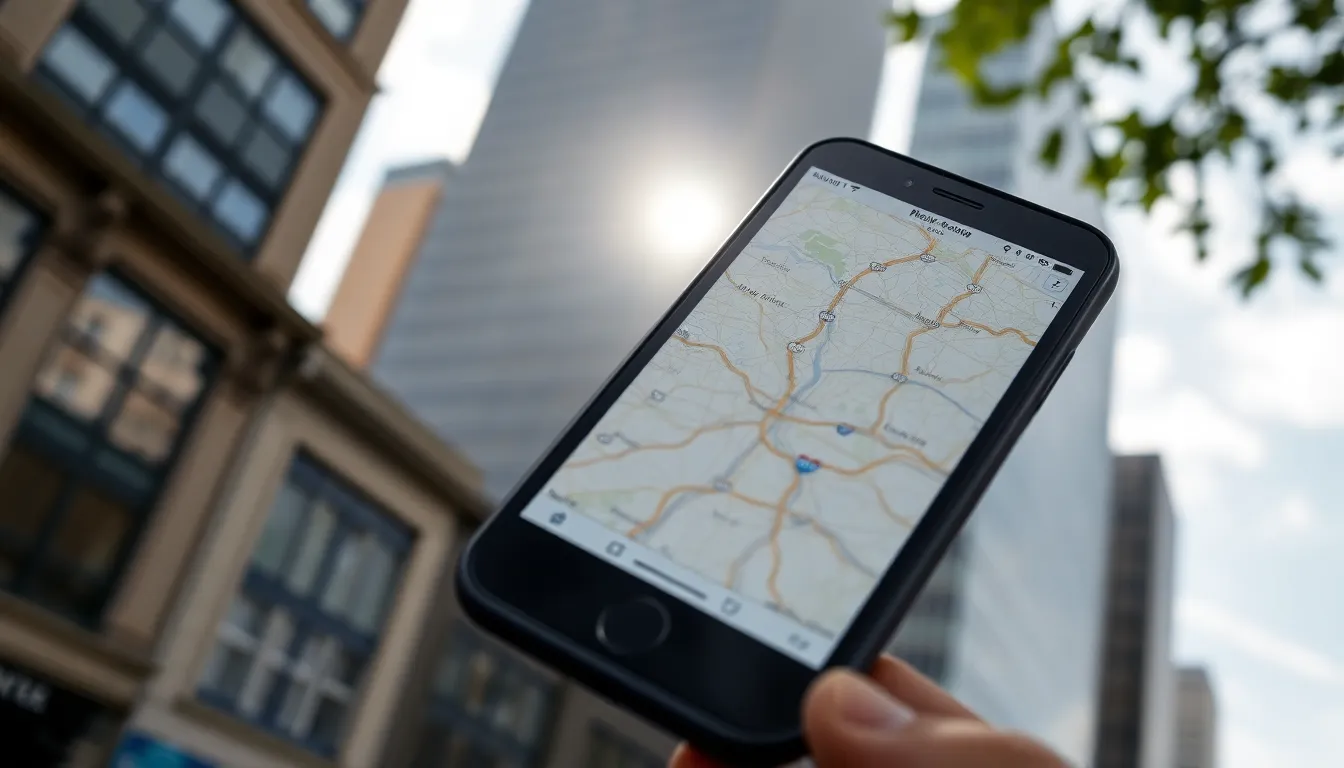
Several elements can influence the accuracy of location sharing on iPhones. Understanding these factors helps users maximize the effectiveness of their experiences.
GPS Signal Quality
GPS signal quality plays a crucial role in determining location accuracy. Clear skies provide the best positioning, allowing devices to pinpoint locations within 5 to 10 meters. Dense structures or natural obstacles can block or weaken signals, leading to less accurate readings. Accuracy may worsen in urban areas where tall buildings obstruct satellite visibility. Furthermore, poor atmospheric conditions, such as heavy rain or storms, can also degrade GPS signal strength. Regular updates to the device’s software can optimize GPS performance, ensuring reliable location data.
Wi-Fi and Cellular Network Influence
Wi-Fi and cellular networks significantly impact location accuracy, especially in urban environments. Wi-Fi signals enhance precision by triangulating user positions from nearby routers, improving accuracy to about 20 meters. Cellular towers contribute by using signal strength and multiple towers to estimate locations. Users should enable Wi-Fi while in areas with poor GPS reception to enhance location reliability. However, in rural settings, reliance on cellular networks may result in lower accuracy due to fewer available towers. Adjusting location settings to prioritize Wi-Fi can help strengthen overall performance.
User Privacy Settings
Users can control their location-sharing preferences through privacy settings on the iPhone. Understanding these settings enhances user security and location accuracy.
Location Services Configuration
Accessing Location Services offers users options to customize which apps can utilize location data. Enabling or disabling “Precise Location” allows for more accurate positioning during app usage. Users can select from three options: “Never,” “While Using the App,” or “Always,” depending on their preferences. Customizing these settings enables more tailored experiences based on individual needs. Activating “Share My Location” ensures friends and family can view real-time location, facilitating connection and safety.
Impact on Accuracy
Location accuracy heavily relies on privacy settings configured within the iPhone. Disabling “Precise Location” can lead to less accurate location sharing, often extending the error range significantly. Network conditions like poor cellular reception can also degrade GPS capabilities and overall reliability. Environmental factors contribute as well, such as tall buildings or dense forests obstructing signals. Keeping Location Services updated helps improve accuracy, as enhancements and bug fixes often address location issues. Understanding these influences enables users to make informed decisions regarding their location-sharing accuracy and privacy.
Comparison With Other Devices
Location sharing accuracy varies across different devices. Android devices, for example, also rely heavily on GPS, Wi-Fi signals, and cellular networks, similar to iPhones. In urban settings, Android’s accuracy can range from 10 to 30 meters, depending on the quality of the signals received.
Smartwatches, like the Apple Watch, depend on the paired iPhone for location data. When connected, they replicate the iPhone’s features and accuracy, usually maintaining a range of 5 to 10 meters outdoors. When disconnected, their accuracy may decrease significantly.
Tablets, often less reliant on cellular networks, primarily use Wi-Fi for location services. This reliance can lead to location accuracy of around 20 meters or more, depending on Wi-Fi signal strength. In comparison, iPads with cellular capabilities exhibit accuracy similar to that of iPhones.
Features such as “Find My” increase device tracking effectiveness across Apple products. The integration of location services enhances the overall user experience. Devices using the latest technology also show improved accuracy, making timely software updates essential for maintaining performance.
Lastly, conditions significantly impact accuracy on each device. Urban areas often provide added challenges, including multipath errors caused by buildings. Therefore, users should consider their environment when assessing location sharing reliability.
Real-World Scenarios
Location sharing accuracy varies based on the environment. Understanding these scenarios helps in assessing its reliability.
Accuracy In Urban Areas
Urban environments present unique challenges for location accuracy. GPS signals often struggle with tall buildings, causing inaccuracies. Users may experience a precision range between 10 to 30 meters due to signal interference. Wi-Fi networks in dense areas can enhance location accuracy significantly. Apple devices utilize available Wi-Fi to refine location estimates. This can lead to improved situational awareness, especially in bustling places. Enabling Wi-Fi is crucial for better performance when outdoors fails to provide a strong GPS signal. Considering that urban landscapes frequently change, adjusting Location Services settings can improve reliability.
Accuracy In Rural Areas
Rural settings offer different location-sharing experiences. Typically, GPS signals perform better in open spaces, often achieving accuracy within 5 to 10 meters. Users may encounter fewer obstacles, making it easier for devices to connect with satellites. However, reliance solely on GPS might present challenges during poor weather. Lack of Wi-Fi and cellular networks can affect accuracy, with a potential decline in precision. Ensuring that Location Services are enabled can mitigate these limitations. Users should monitor their environment for anticipated changes, making them aware of possible inaccuracies during their travels.
Location sharing on iPhones offers a generally reliable experience but isn’t without its challenges. Users must be aware of the various factors that can impact accuracy including environmental conditions and device settings. By understanding how GPS, Wi-Fi, and cellular networks work together, individuals can optimize their location sharing for better precision.
Regularly updating software and managing privacy settings are essential steps for enhancing both accuracy and security. Ultimately, knowing how to navigate these elements can lead to a more effective and trustworthy location sharing experience, making it a valuable tool for users in both urban and rural settings.